

[Panel de congrès] « The political geography of supply chain’s securitization » au congrès annuel de la RGS
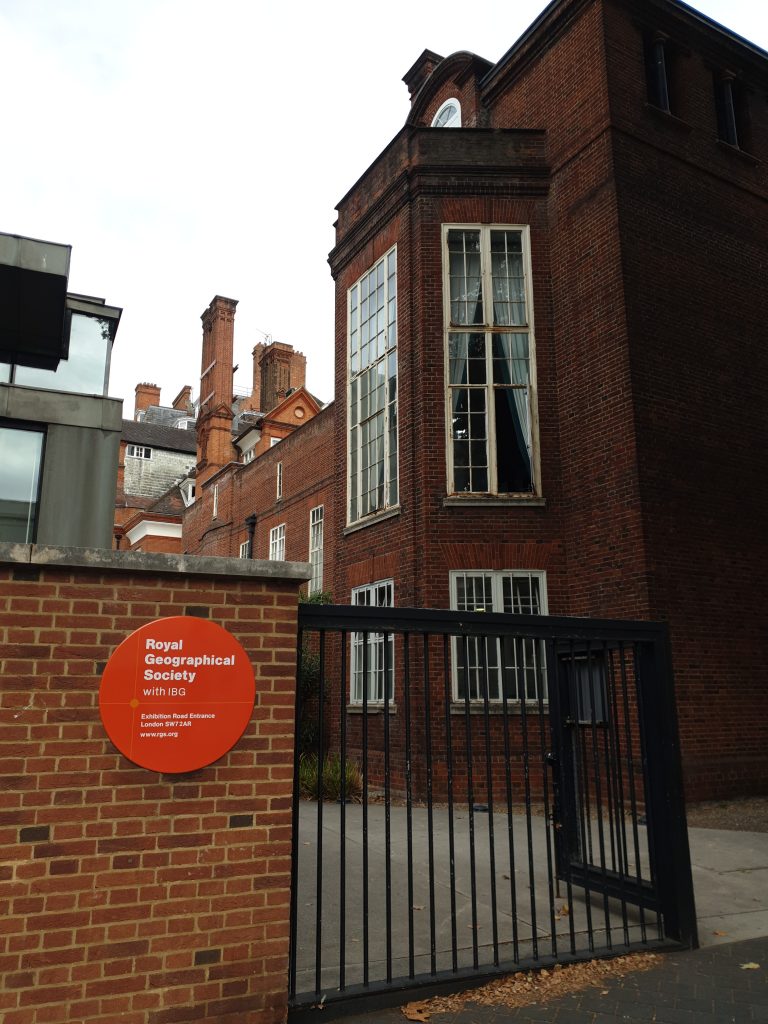
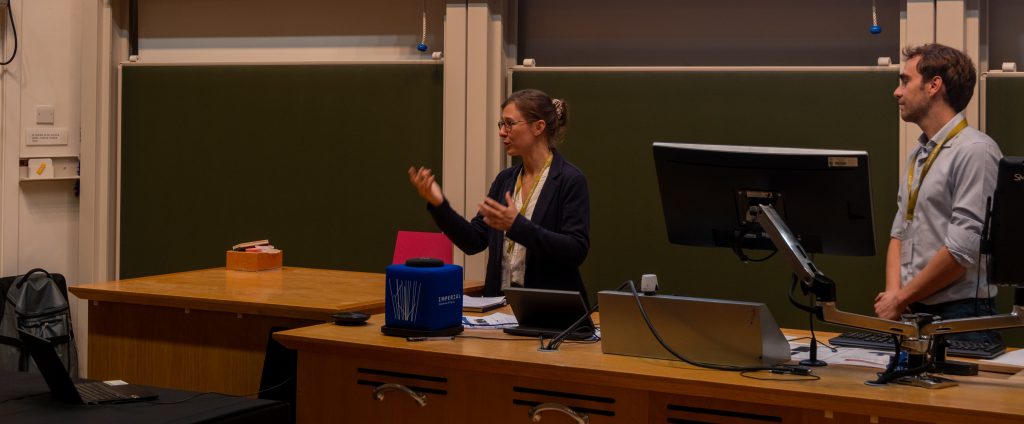
Dans le cadre du RGS-IBG Annual International Conference 2026, qui s’est tenu du 1er au 4 septembre 2026 à Londres, Audrey Sérandour, David Schröter et Nicolas Hercelin ont co-organisé un panel portant sur les croisements entre géographie financière et géographie politique des ressources. Il s’agissait d’examiner comment les flux et instruments financiers façonnent les rapports de pouvoir autour de l’extraction, de la transformation et du transport de ressources minières et énergétiques.
Résumé du panel :
Resource extraction is a highly capital-intensive industry, sustained by a variety of financial flows. Whether expressed as equity investment, derivatives, bank loans, capital markets’ bonds or public finance instruments (subsidies, guarantees, etc.), these financial flows are not simply movements of capital: they shape the political geography of resources. In fact, they structure power relations (dependence, risk mitigation, governance of uncertainty, control of information, capture of value, etc.) and determine the materialization of extractive activities in space (investment locations, connections between territories, political and environmental governance, local distribution of revenues etc.).
This panel proposes to examine how financial flows and financial instruments shape the political geography of resources. Drawing on constructivist approaches (Raffestin 1980; Bridge 2009), we understand resources as processes of continuous construction at the intersection of material substances, political and economic contexts, technological availability, legal frameworks, but also financial mechanisms and instruments. These mechanisms and instruments operate at different scales and are networked to different places (i.e. financial centers, offshore centers, regional markets etc). Hence construction processes of resources are entangled in financial valuation processes.
This approach to resources places great importance on the notion of value. Drawing on pragmatic approaches to valuation (Hercelin 2025), « the » value of a resource, of an economic project, or of a territory is shaped by the particular rationalities of financial instruments and models (Doganova 2024) – such as expected profitability, commodification, risk management, etc. Such financial valuation practices are contested by other valuation regimes – such as inalienability of land, competiting land use, the sanctity of a substance, etc. Instruments and models themselves can also be employed in or even act as sites of resource conflicts, for example for computing the distribution of mining rents or environmental compensation.
Approaching resources through the lens of financial geography raises methodological challenges. The financial world has proven difficult to access. In this panel, we wish to give space to methodological considerations: on the one hand, how can we access financial data and actors? And on the other hand, how can the tools of financial geography inform research in the political geography of resources?
Interventions dans le cadre du panel :
The Power to Price: Transformations in the Cobalt GPN at the Intersection of Financial and Physical Markets
» Aleksandra Wojewska (Austria – University of Vienna)
The Strategy of the Government of the State of Mecklenburg–Western Pomerania to Shield Nord Stream 2 from U.S. Sanctions
» Sami Ramdani (France – IRIS)
EU strategic autonomy, beyond narrative? Mapping EU ownership and control in manganese global production networks
» Nicolas Hercelin (France – Sciences Po Bordeaux) and Paolo Balmas (Luxembourg – Luxembourg Institute of Socio-Economic Research)
Plus d’informations sur le site Internet de la Royal Geographical Society.