

[Publication] Article dans la revue Political Geography
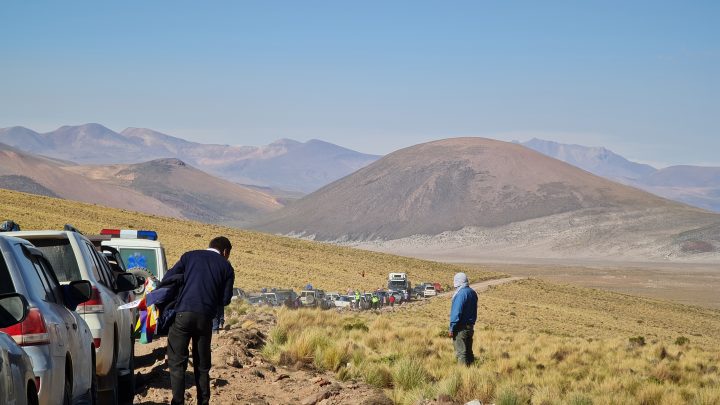
[Publication] Article dans la revue Political Geography David Schröter co-publie avec Felipe Fernández et Alke Jenss un article sur les pratiques politiques et spatiales d’acteurs locaux qui cherchent à tirer parti du développement d’un projet d’extraction de lithium dans l’Altiplano bolivien, notamment en termes d’infrastructures. Dans une perspective de géographie politique et d’anthropologie des infrastructures énergétiques et minières, il s’agit de mieux comprendre les cas où un projet d’exploitation de ressource ne fait pas seulement l’objet de contestations, mais se trouve aussi activement façonné et négocié par des acteurs locaux. Résumé : Given the new extractive geographies of the energy transition, the Bolivian salt flat Salar de Uyuni has gained enormous attention since it represents the world’s largest lithium deposit in the world. We understand lithium mines in the South American Andean region as part of a global infrastructural arrangement brought about by political and financial forces to foster and nurture the energy transition. In Bolivia, lithium extraction encapsulates promises of economic growth and development, following the MAS’ agenda of resource extraction in the context of nationalization and redistribution. This case highlights the importance of paying attention to how extractive projects are embedded into certain national and political configurations, while still being part of global capital relations. In this paper we examine the political and legal mobilizations demanding public infrastructures around lithium extraction articulated by civil society organizations and local state actors in the mining region of Potosí, in Southwestern Bolivia. We argue that FRUTCAS, a regional civil society organization, appropriates and leverages the transnational geographies of lithium to articulate their demands. Rather than opposing lithium extraction, local actors negotiate and seek to benefit from the construction and expansion of infrastructures. Civil society actors such as FRUTCAS adapt their demands to the perceived interests of the Bolivian central state and global energy infrastructures, framing the highway construction as highly beneficial to lithium extraction. At the same time, they seek infrastructural connection for themselves. This article brings perspectives from political geography and anthropology on infrastructures of energy and extraction together to understand better cases where the extraction of lithium, lithium transport infrastructures and their wider geographies are not only contested, but actively shaped and negotiated by local political actors. Article consultable sur ScienceDirect : Schröter, David, Felipe Fernández, and Alke Jenss. 2026. ‘The Lithium Road. Political Practices in Favor of Extractive Infrastructures in the Bolivian Altiplano.’ Political Geography 128 (June): 103541.